Race Side-by-Side Back-Half Chassis Rebuild Done Right
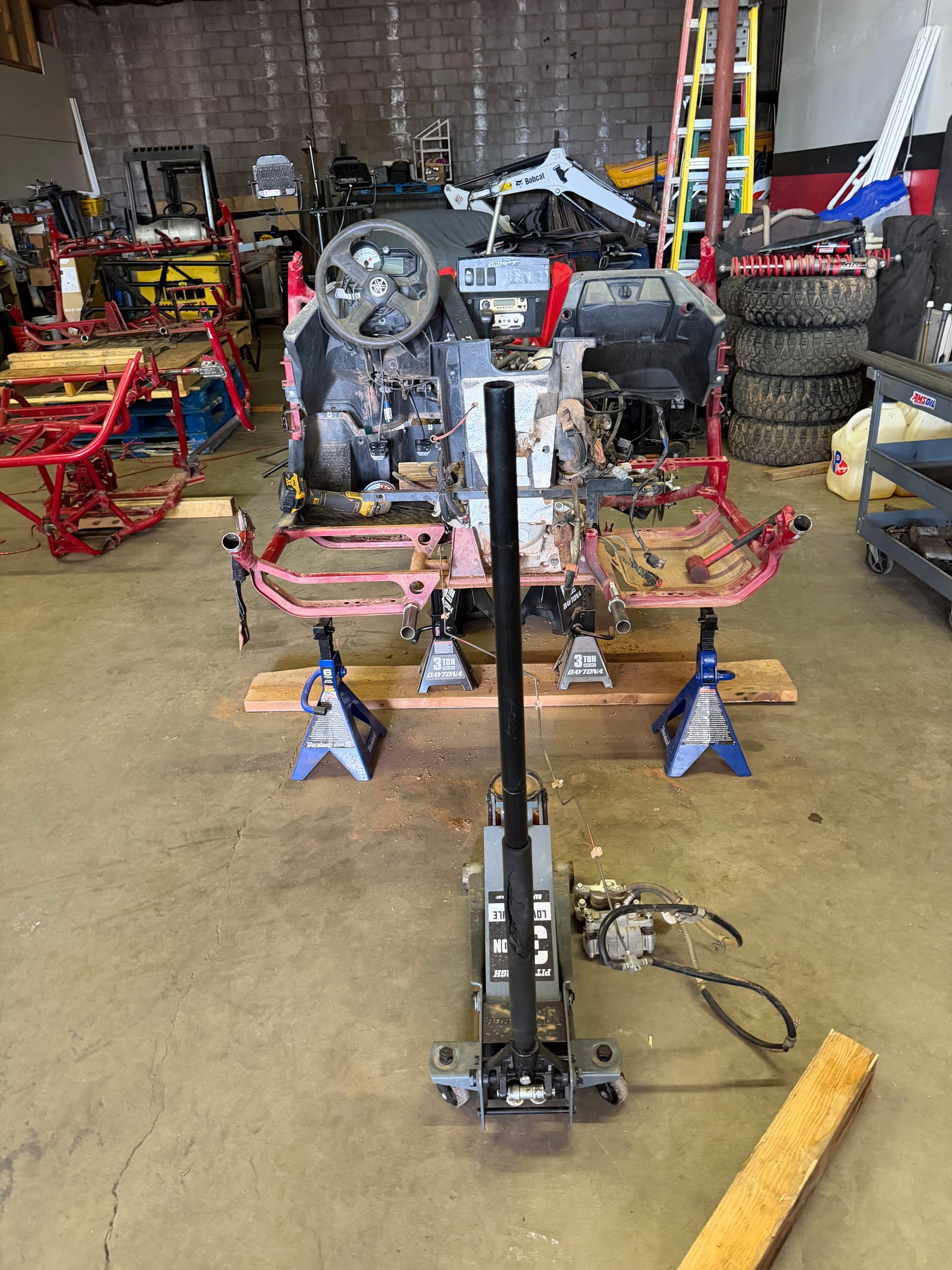
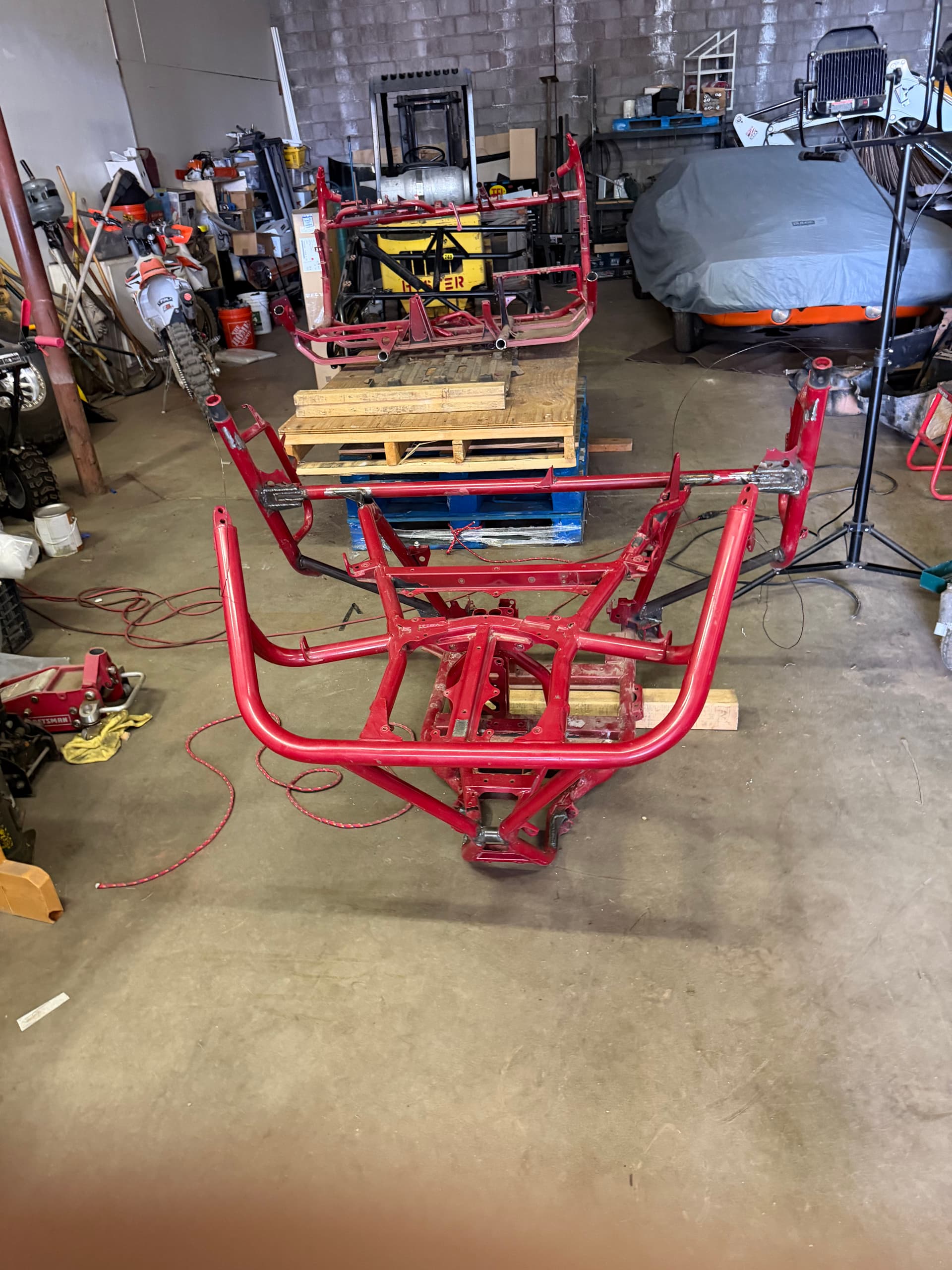
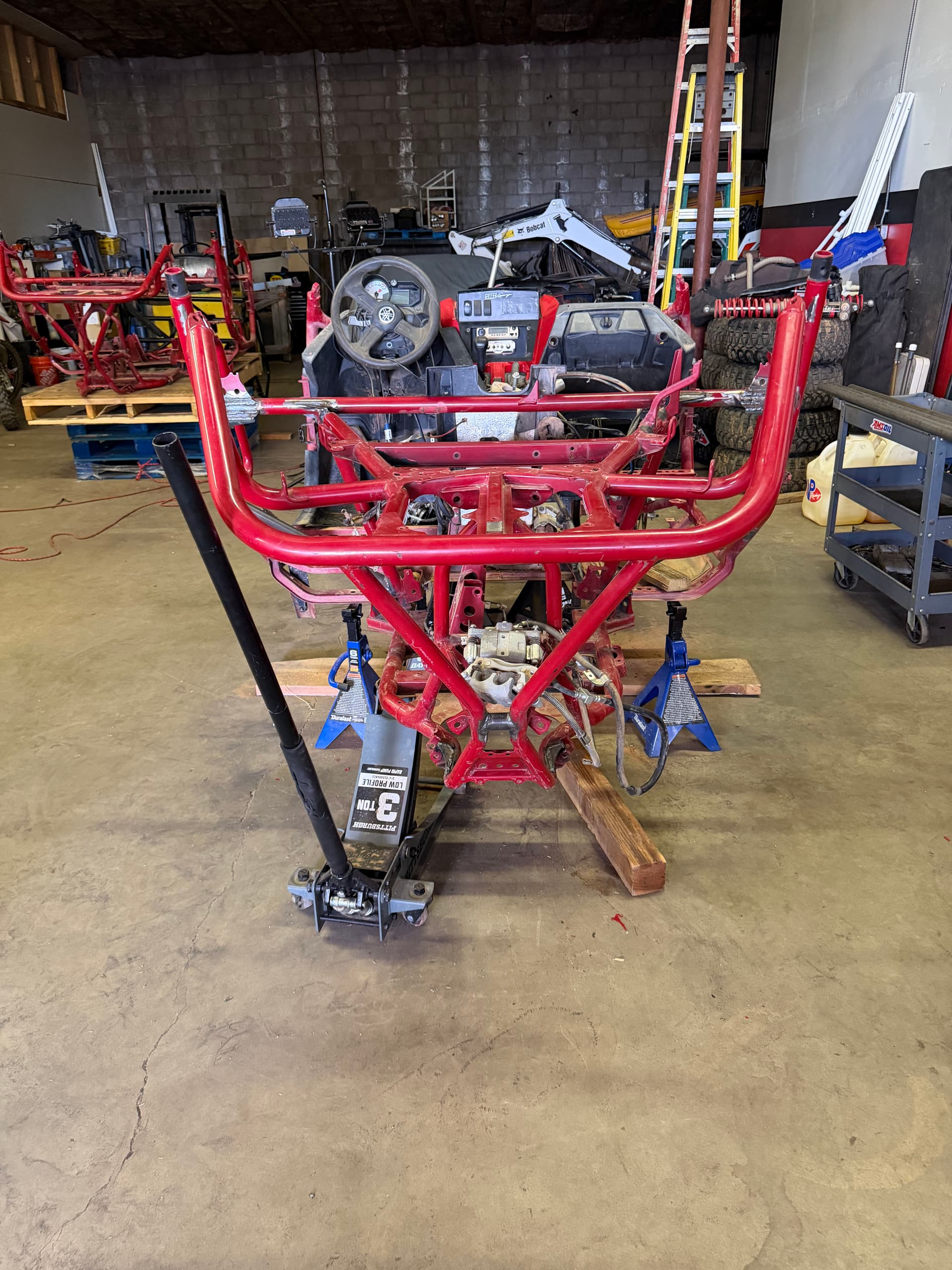
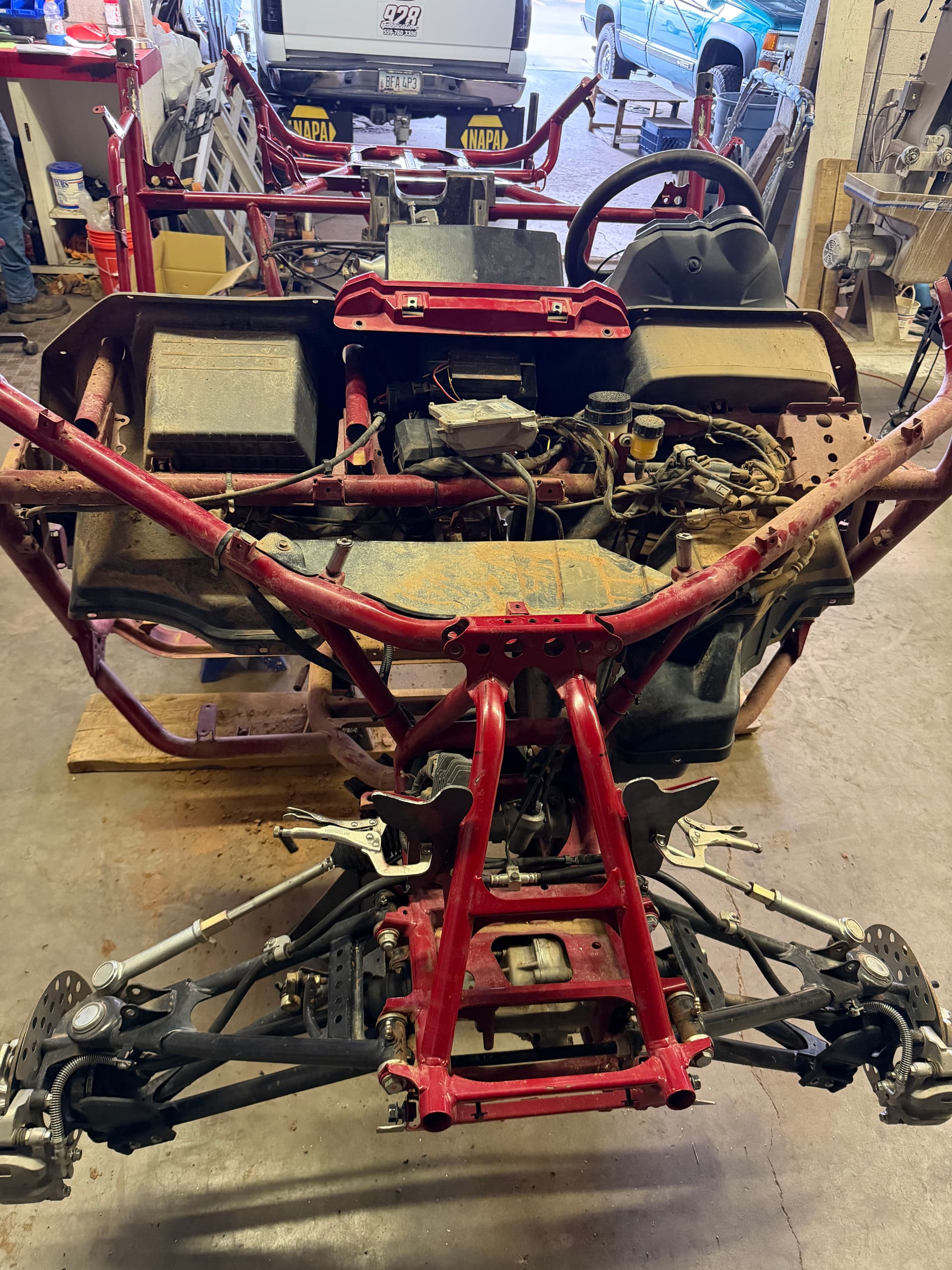
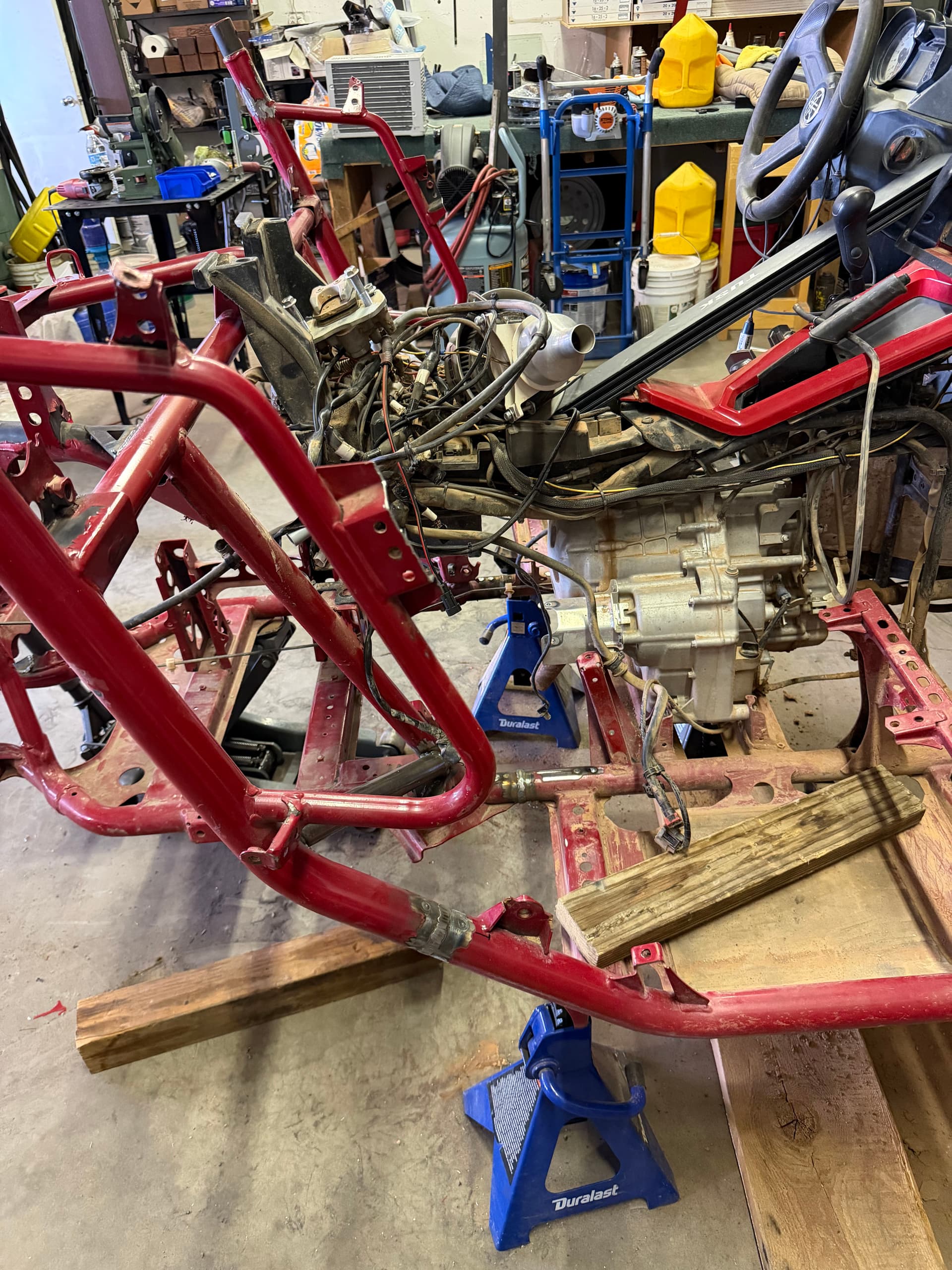
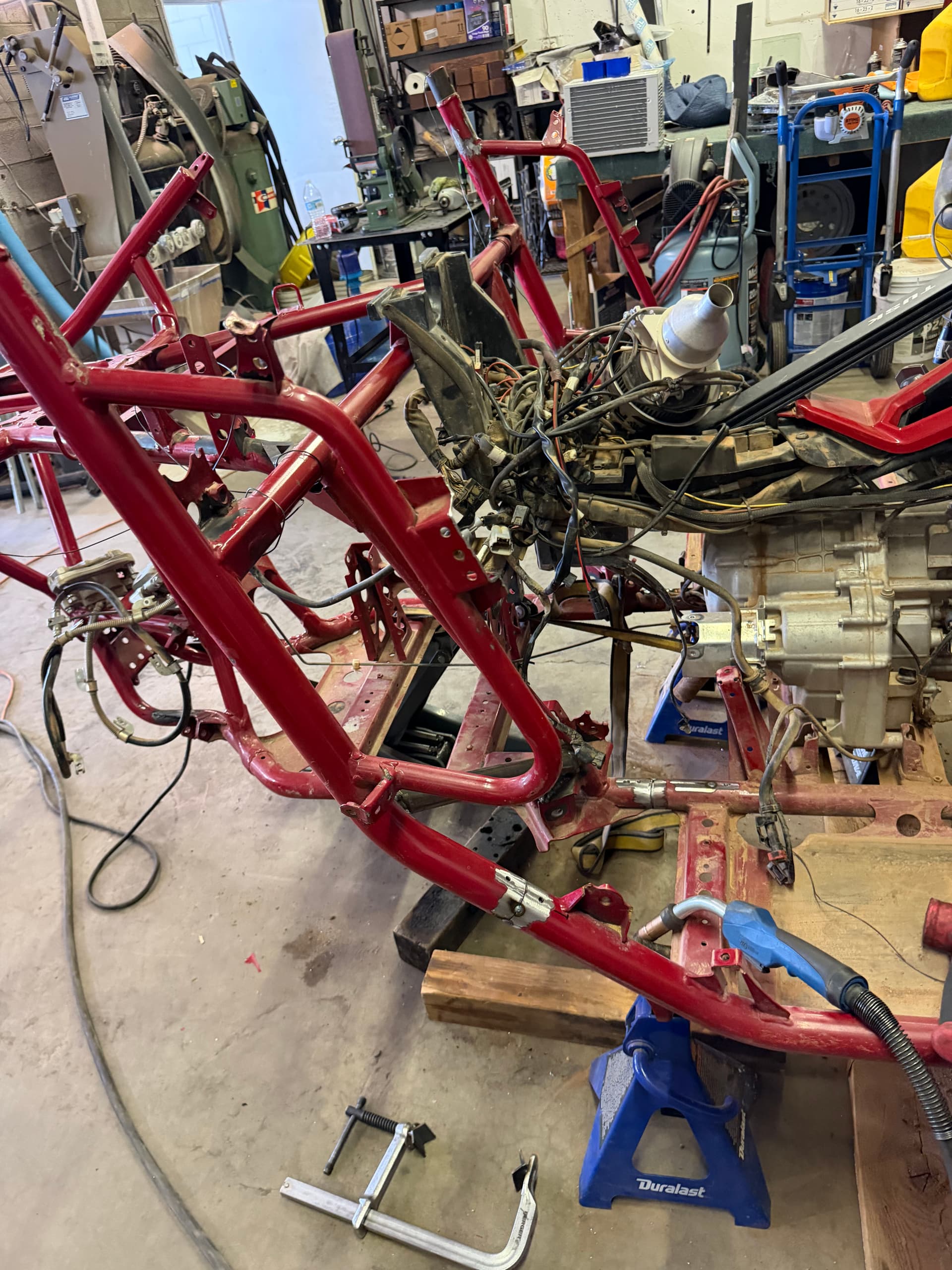
When a race chassis fails at the rear, you can't just slap a patch on it and call it good. Not if it's going back on a track. This side-by-side came in with a failed rear section - the kind of damage that requires cutting out the bad material entirely and starting fresh with proper fit-up and solid welds.
Here's what that actually looks like in practice. We stripped the chassis down, got it level and supported on jack stands, and cut away the failed back half. From there, we sleeved in a new rear section and reinforced the whole thing with donor chassis material. Every joint had to be fitted tight before a single weld was laid down. That's not optional - it's the only way to make sure the geometry stays true and the repair holds up under race stress.
This is the kind of work where shortcuts show up fast. A bad cut angle, a gap that's too wide, welds that look fine on the surface but weren't properly fused - any of those things can cause a failure at the worst possible time. We take the fit-up process seriously because the welding is only as good as the prep behind it.
The chassis came back together clean. New back half sleeved and welded in, reinforced with matching donor material, and ready to handle whatever the next race throws at it. That's the goal with any race fab work - not just fixing what broke, but making sure it's stronger coming out than it was going in.
Race chassis repair is a specialty that sits right at the intersection of fabrication skill and structural understanding. We do this kind of work regularly, and we don't take lightly the trust that comes with someone handing over their race rig. When it leaves our shop, it's race-ready.